

2026 Winner Profile
ACGR Award for Excellence in Graduate Research Indigenous Excellence and Empowerment
Poche Centre for Indigenous Health
The University of Queensland
When a new cohort of Aboriginal and Torres Strait Islander scholars gathers at the University of Queensland’s Poche Centre for Indigenous Health, they are welcomed by the Centre’s Director– leading Indigenous researcher Professor James Ward–alongside other Indigenous researchers and higher degree research (HDR) candidates. The involvement of a wide range of Indigenous researchers and faculty members provides cultural grounding and reinforces the importance of Indigenous people being welcomed, supported and represented in academic spaces, setting the tone for a program built around cultural safety, relationality and community accountability.
This focus on accountability, culture, and deep-seated relational support is the driving force behind the UQ Poche Centre for Indigenous Health team. The team, Professor James Ward (Pitjantjatjara and Narungga), Associate Professor Judith Dean, Dr Stephen Harfield (Narungga and Ngarrindjeri), and Rebekah Hauiti (Kamilaroi) has been awarded the 2026 ACGR Award for Excellence in Graduate Research Indigenous Excellence and Empowerment for its outstanding leadership in establishing culturally safe, community-governed research pathways.
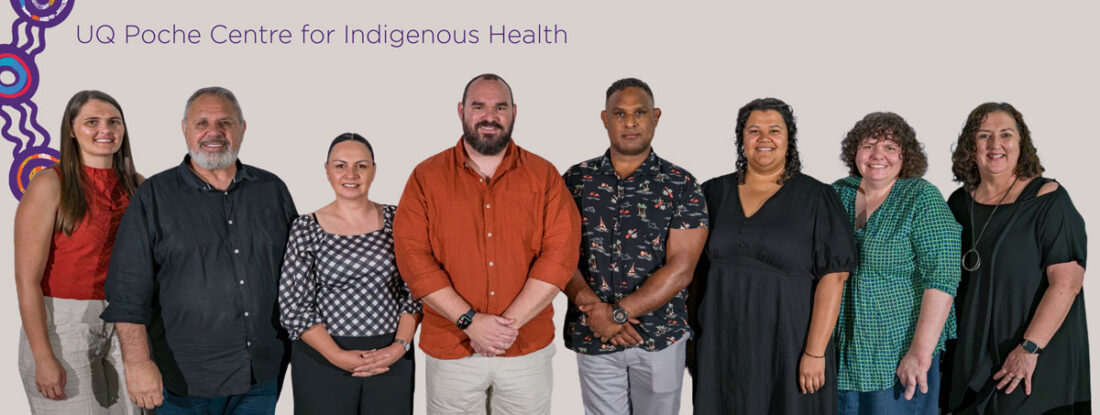
At the heart of their success is the pioneering Pathways to a PhD: Doing Research for Mob program. Launched in 2022 to address the stark underrepresentation of First Nations peoples in higher degree research (HDR), the intensive three-day program is designed specifically “by Mob for Mob.”
The program aims to demystify the PhD journey and provide culturally responsive, community-centred pathways into research careers. It provides guidance for understanding scholarship pathways, selecting institutions aligned with participant goals, and navigating university systems. Equally importantly, participants are encouraged to pursue the pathway and institution best suited to their personal, cultural and professional needs and ways of knowing, being, and doing.
To date, the program has supported 78 Aboriginal and Torres Strait Islander participants nationwide, including 33 interstate scholars. It has already translated into 12 confirmed HDR enrolments across PhD and Master of Philosophy programs, with several early candidates now entering the final stages of their candidatures.
This relational model features support that extends for over a year, with two of the team conducting intensive follow-up check-ins at one, four, nine, and twelve months post-workshop. They also guide participants in identifying culturally safe supervisors, refining resumes, crafting research proposals, and coaching them on how to approach potential academic advisors.
For those who proceed to enrolment, the support continues through the “Yarning for Success” initiative, which provides regular peer networking, mentoring, and workshops to combat the isolation that so often derails doctoral studies.
The results speak for themselves: the UQ Poche ecosystem celebrated six PhD graduations in 2025, and a further three in 2026.
The model is also becoming increasingly visible across the university. Multiple faculties and centers across UQ regularly seek the team’s guidance on ethical community engagement, Indigenous HDR recruitment, and culturally responsive supervision. Elements of their support framework are also helping to inform the HDR structures of UQ’s proposed new Indigenous research institute.